

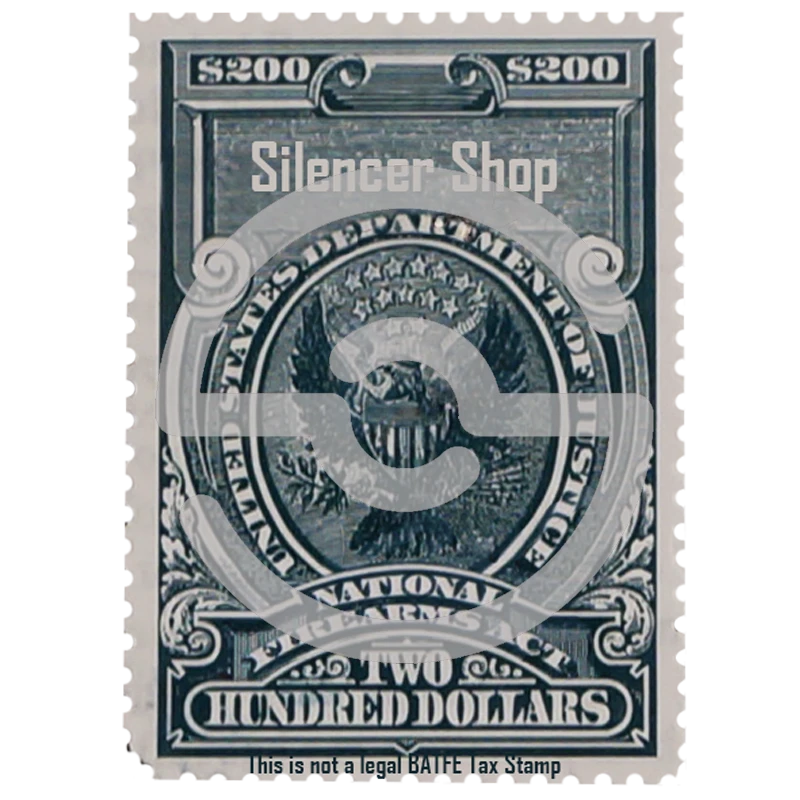
For generations of American gun owners, the $200 NFA tax stamp was a steep entry fee just to exercise a right with a suppressor or a more compact rifle setup. In 2026, that federal tax dropped to $0—and ATF’s guidance has since changed, too.
The big picture: the federal making and transfer tax for suppressors, short-barreled rifles (SBRs), short-barreled shotguns (SBSs), and certain “any other weapons” (AOWs) went to $0 on January 1, 2026. Then, after a federal court ruling, ATF announced that it would stop enforcing several National Firearms Act requirements for those covered items beginning October 9.
That’s a major shift for lawful firearm owners. But the details matter. Here’s a clear look at what changed, what the latest ATF guidance says, and what gun owners should keep in mind.
What is an ATF tax stamp?
An ATF tax stamp is proof that the federal tax tied to certain National Firearms Act (NFA) applications has been paid. For years, making or transferring many NFA items meant filing paperwork with ATF, paying the tax, and waiting for the application to be processed. That $200 charge had been on the books since 1934. For many owners, it was a costly hurdle on top of the item’s purchase price and the time required to complete the process.
Which NFA items went from $200 to $0?
The One Big Beautiful Bill Act, Public Law 119-21, set the federal making and transfer tax to $0 for NFA firearms other than machine guns and destructive devices, effective January 1, 2026. Covered categories include:
Suppressors, also commonly called silencers
Short-barreled rifles
Short-barreled shotguns
Certain AOWs
The tax remains for machine guns and destructive devices. Congressional Research Service overview
Did the $0 tax mean the NFA paperwork disappeared?
Not at first. When the new tax rate took effect on January 1, the tax dropped to zero, but ATF’s rules still called for applications and registration. So the first change lowered the cost without immediately removing the paperwork.
That changed again after a federal district court ruling in August 2026. ATF’s current guidance says the court blocked specified NFA requirements for certain parties. The Department of Justice then adopted a broader non-enforcement policy for the covered items. Effective October 9, ATF says it will not enforce specified federal NFA requirements—including prior approval and registration—as applied to SBRs, SBSs, suppressors, and AOWs. ATF’s current guidance and FAQs
What does ATF say applies now?
Under ATF’s October 2026 guidance, the agency will not enforce the federal NFA requirements to get prior approval before making or transferring covered items, or the NFA registration and related requirements for those items. ATF describes this as an enforcement policy; it is not a repeal of the National Firearms Act. ATF’s current guidance
ATF also says it will continue to accept voluntary Form 1 registrations. Details can vary depending on the item and transaction, so check ATF’s latest guidance before taking action.
What rules still matter?
A $0 federal tax and ATF’s current enforcement policy do not make every firearm transaction unrestricted. Gun owners should still account for:
State and local laws. ATF says its guidance does not override state or local restrictions. Some states restrict or prohibit certain NFA items.
General federal firearm laws. ATF says unlicensed individuals may not engage in the business of manufacturing or transferring firearms, transfer covered items to residents of another state outside applicable legal processes, or transfer them to people prohibited from possessing firearms.
Machine guns and destructive devices. These remain subject to the NFA tax and requirements.
Some transportation rules. ATF says people must continue to submit Form 20 before interstate transportation of an SBR or SBS, even if it is unregistered.
A changing legal landscape. ATF’s announcement is a non-enforcement policy, and laws, court orders, and agency guidance can change.
Know your state’s rules and check the latest ATF guidance before making, acquiring, possessing, or transporting a covered firearm.
How much does an ATF tax stamp cost in 2026?
For covered suppressors, SBRs, SBSs, and AOWs, the federal making and transfer tax is $0. The tax remains for machine guns and destructive devices. The item’s purchase price, dealer charges, and any state or local fees are separate.
Frequently asked questions
Is the $200 suppressor tax stamp gone?
The federal making and transfer tax for suppressors went to $0 on January 1, 2026. ATF’s guidance, effective October 9, also says the agency will not enforce specified NFA application, approval, and registration requirements for suppressors under its current policy. State and local laws still apply.
Do I still need ATF approval for an SBR or suppressor?
ATF’s current guidance says it will not enforce the federal NFA requirement for prior approval before making or transferring covered items. That policy followed a court ruling. Check the latest ATF guidance and your state’s laws before proceeding.
Does the $0 tax apply to machine guns?
No. ATF says the tax remains in place for machine guns and destructive devices, which remain subject to NFA requirements. ATF guidance
Are NFA items legal in every state now?
No. Federal tax changes and ATF guidance do not override state and local laws. Some states prohibit or restrict certain items.
Can I travel across state lines with an SBR?
ATF says people must continue to file Form 20 before interstate transportation of an SBR or SBS, even if it is unregistered. Check ATF’s current instructions and the laws of each state involved before traveling.
The takeaway
The ATF tax stamp going from $200 to $0 is a big win for lawful gun owners who have long faced an extra federal cost to make or transfer certain NFA items. The change began with Public Law 119-21, and ATF’s October 2026 guidance added a broader non-enforcement policy for specified NFA requirements covering suppressors, SBRs, SBSs, and AOWs.
Machine guns and destructive devices remain subject to NFA taxes and rules, and state and local restrictions still count. For the latest federal details, start with ATF’s NFA transfer guidance, then confirm the rules where you live.
This article is for general informational purposes and is not legal advice. Laws, court orders, and agency policies can change.